The Lakeshore's Premier Real Estate Blog!

This is the home of the Besteman Properties Real Estate Blog. We are committed to being the best choice for your real estate needs on West Michigan's Lakeshore. We update our blog with information we thing interesting or informational.

Nov. 30, 2022

Why There Won’t Be a Flood of Foreclosures Coming to the Housing Market
Why There Won’t Be a Flood of Foreclosures Coming to the Housing Market

Why There Won’t Be a Flood of Foreclosures Coming to the Housing Market | MyKCM

With the rapid shift that’s happened in the housing market this year, some people are raising concerns that we’re destined for a repeat of the crash we saw in 2008. But in truth, there are many key differences between what’s happening today and the bubble in the early 2000s.

One of the reasons this isn’t like the last time is the number of foreclosures in the market is much lower now. Here’s a look at why there won’t be a wave of foreclosures flooding the market.

Not as Many Homeowners Are in Trouble This Time

After the last housing crash, over nine million households lost their homes due to a foreclosure, short sale, or because they gave it back to the bank. This was, in large part, because of more relaxed lending standards where people could take out mortgages they ultimately couldn’t afford. Those lending practices led to a wave of distressed properties which made their way into the market and caused home values to plummet.

But today, revised lending standards have led to more qualified buyers. As a result, there are fewer homeowners who are behind on their mortgages. As Marina Walsh, Vice President of Industry Analysis at the Mortgage Bankers Association (MBA), says:

For the second quarter in a row, the mortgage delinquency rate fell to its lowest level since MBA’s survey began in 1979 – declining to 3.45%. Foreclosure starts and loans in the process of foreclosure also dropped in the third quarter to levels further below their historical averages.”

There Have Been Fewer Foreclosures over the Last Two Years

While you may have seen recent stories about the number of foreclosures rising today, context is important. During the pandemic, many homeowners were able to pause their mortgage payments using the forbearance program. The program gave homeowners facing difficulties extra time to get their finances in order and, in many cases, work out a plan with their lender.

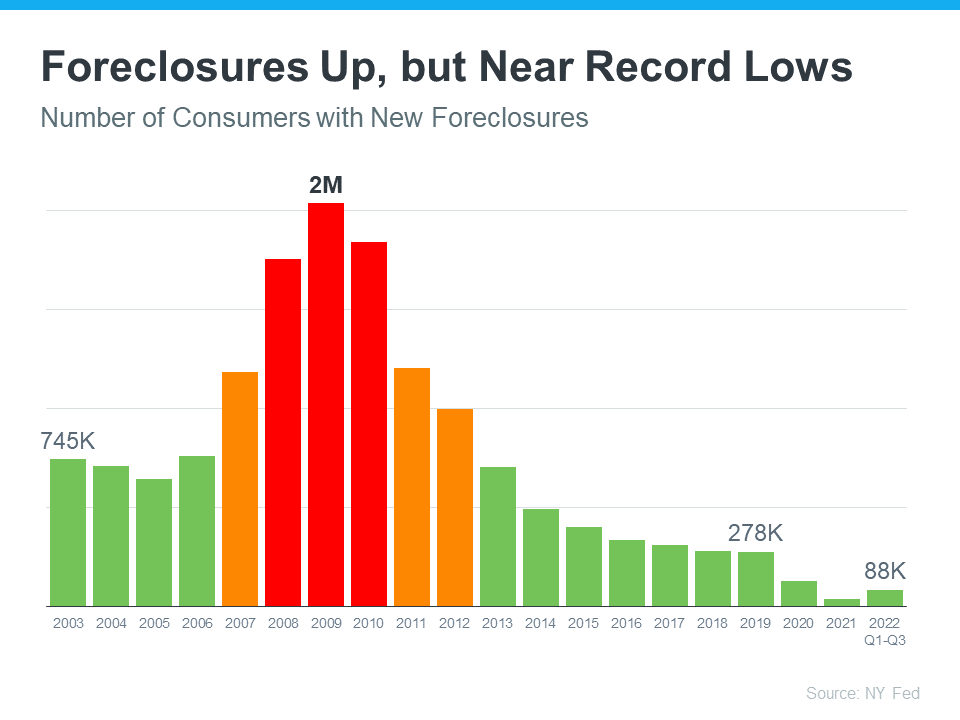
With that program, many were concerned it would result in a wave of foreclosures coming to the market. That fear didn’t materialize. Data from the New York Fed shows there are still fewer foreclosures happening today than before the pandemic (see graph below):
Why There Won’t Be a Flood of Foreclosures Coming to the Housing Market | MyKCM

That means, while there are more foreclosures now compared to last year (when foreclosures were paused), the number is still well below what the housing market has seen in a more typical year, like 2017-2019.

And most importantly, the number we’re seeing now is still far below the number we saw during the market crash (shown in the red bars in the graph). The big takeaway? Don’t let a headline in the news mislead you. While foreclosures are up year-over-year, historical context is essential to understanding the full picture.

Most Homeowners Have More Than Enough Equity To Sell Their Homes

Many homeowners today have enough equity to sell their homes instead of facing foreclosure. Due to rapidly rising home prices over the last two years, the average homeowner has gained record amounts of equity in their home. And if they’ve stayed in their homes even longer, they may have even more equity than they realize. As Ksenia Potapov, Economist at First Americansays:

Homeowners have very high levels of tappable home equity today, providing a cushion to withstand potential price declines, but also preventing housing distress from turning into a foreclosure. . . the result will likely be more of a foreclosure ‘trickle’ than a ‘tsunami.’”

A recent report from ATTOM Data explains it by going even deeper into the numbers:

“Only about 214,800 homeowners were facing possible foreclosure in the second quarter of 2022, or just four-tenths of one percent of the 58.2 million outstanding mortgages in the U.S. Of those facing foreclosure, about 195,400, or 91 percent, had at least some equity built up in their homes.”

Bottom Line

If you see headlines about the increasing number of foreclosures today, remember context is important. While it’s true the number of foreclosures is higher now than it was last year, foreclosures are still well below pre-pandemic years. If you have questions, let’s connect.
Posted in Buying your Home
July 11, 2017

Kitchen Remodel

The kitchen is one area of the home that sees the most wear and tear. All the water, heat, and food spills add up quickly so it’s important to focus on quality and lasting appeal when you’re choosing materials for a kitchen remodel. Here are a few things you should avoid:

Cheap Laminate Countertops: The bottom rung of laminate is extremely susceptible to wear and tear. It can melt if you forget to place a hot pad under a pan that’s fresh out of the oven and the edges can chip off from repeated exposure to moisture and heat.

Flat Paint: A flat or matte finish is great in rooms with lower traffic, but it’s a bad idea in the kitchen where the walls are regularly exposed to splatters and spills. You need paint that can withstand an occasional heavy scrubbing, so opt for gloss or semi-gloss finishes.

Trendy Backsplash: If you watch any home remodeling show, you’ll certainly see kitchens with expensive, elaborate backsplash designs and materials. Those trends can be pricey to pursue and can look dated in a hurry. Subway tile is a cheaper, classic option that you’ll never regret, plus you’ll have more room in your budget to purchase quality materials to be used elsewhere.

Cheap Flooring: Just like the countertops, your kitchen floor needs to be strong enough to take some abuse. Cheap flooring easily scuffs and peels (especially from moisture). Quality flooring is worth the investment.

Posted in Selling your Home
April 4, 2017

HOA

When you purchase a home, there's a good chance you'll have to pay a homeowners association fee, especially in gated communities, townhouses, condominiums, and other similar planned neighborhoods. The idea is to keep common areas clean and maintained, and there's usually an HOA board that is responsible for setting the rules and regulations.

Each HOA is different, but most have the same core elements. You'll typically pay your HOA fees either monthly or annually, and it's an important factor to consider when you're weighing your options for a new home. So what is typically included in your HOA fees?

First, the fun stuff Amenities are typically the big perk of living in a community with an HOA. While you lose out on some of the freedom of living without an HOA, you instead get community amenities like a maintained pool, gym, clubhouse, tennis courts, and other amenities. The HOA fees pay for cleaning and maintenance, so-in theory-you'll always have a clean pool whenever you want to use it.

Protecting the community HOA fees often contribute to insurance for the community amenities, as well as a fund for unexpected repairs to damaged community property-think damage from weather or accidents.

General maintenance Your HOA fees will go toward maintaining the general safety and upkeep of the community. This means things like elevator maintenance for condominiums, snow removal, and trash/recycling services.

Be active in the association There may be a board of directors, but homeowners associations exist for the betterment of the entire community, and every voice matters. HOA meetings-and the amenities they support-provide great opportunities to meet your neighbors and make your community a better place.


Posted in Buying your Home
Jan. 31, 2017

You Tube Remarketing Ad with Website Instructions

Posted in Misc
Jan. 31, 2017

Youtube Ad 1

Posted in Buying your Home
Jan. 23, 2017

January 2017 West Michigan Area Market Report

Posted in Market Reports
Nov. 9, 2016

November 2016 Real Estate Market Report West Michigan

Posted in Misc
Nov. 8, 2016

October 2106 Market Report

Posted in Misc
Oct. 12, 2016

October 2106 Real Estate Market Reprot

Posted in Misc
Sept. 26, 2016

Market Condition Report Instructions

Posted in Selling your Home